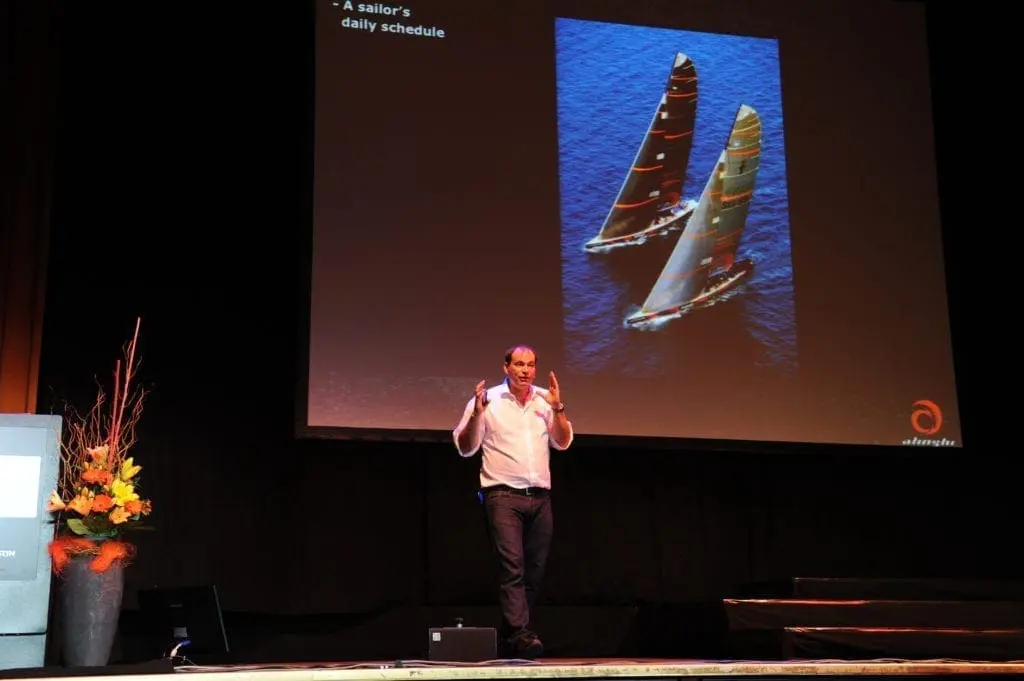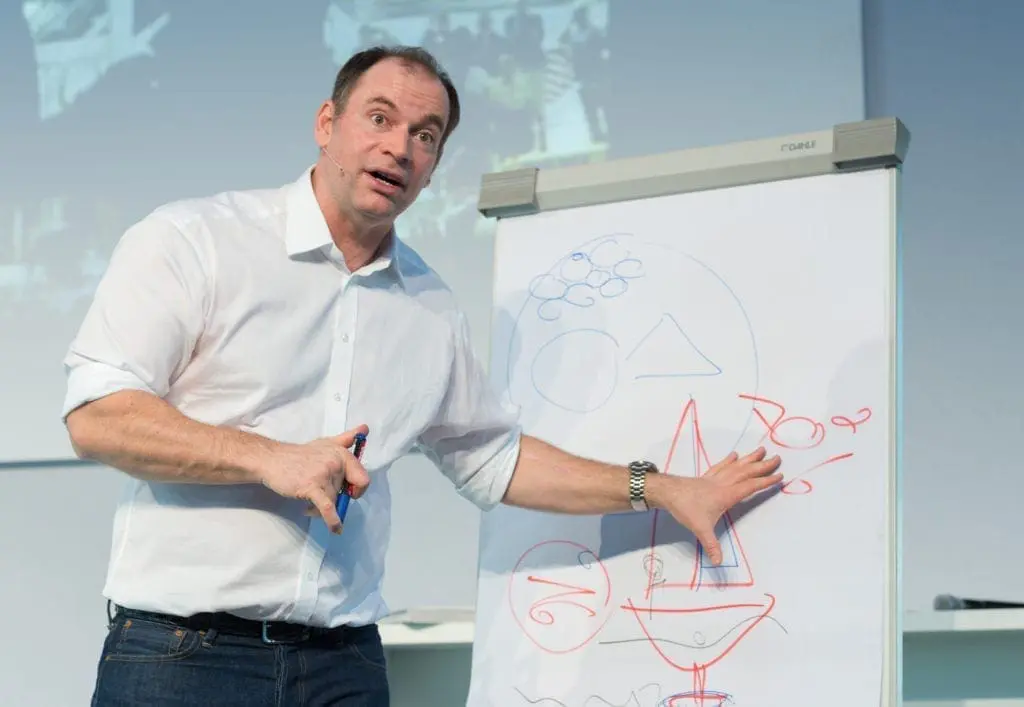
















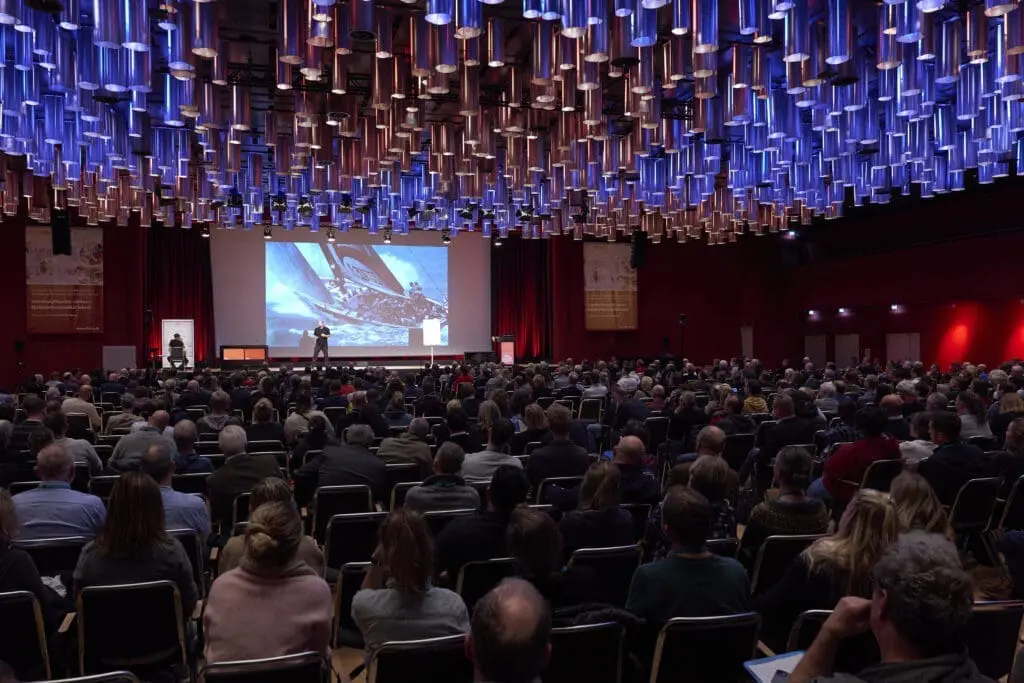
Dominik Neidhart – Trust simplifies complexity. Dominik Neidhart is an elite athlete, a three-time America’s Cup competitor, and a winner with the Alinghi team.
Maintaining direction despite adverse conditions and guiding your company through challenging periods. Dominik Neidhart draws comparisons between elite sailing and the business world, demonstrating how success relies on the ability to operate as a cohesive team under extreme circumstances.
Speaker Dominik Neidhart understands what it means to ride the waves of success while facing fierce competition.
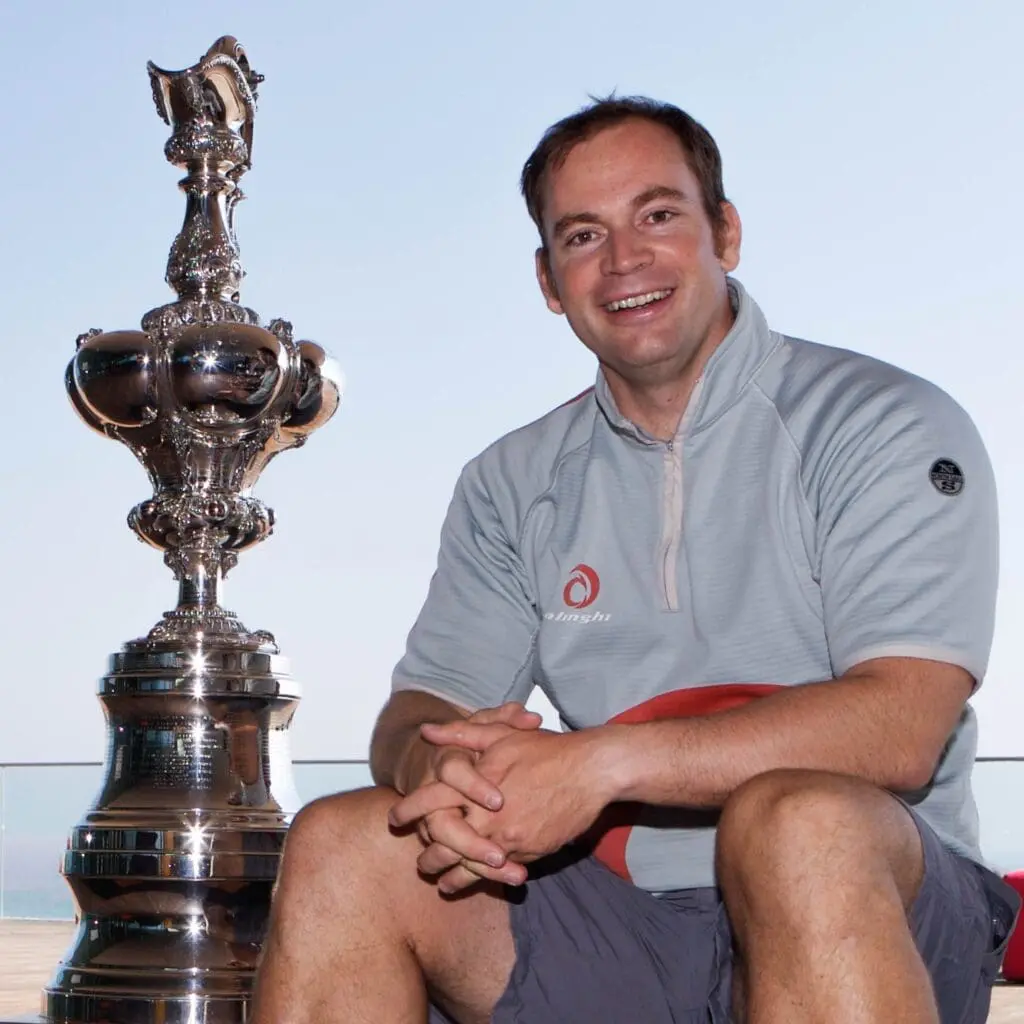
Dominik Neidhart was part of the Alinghi crew that won in New Zealand. After completing medical studies, he pursued his passion for sailing. Across three America’s Cup campaigns – an initial unsuccessful attempt, a victorious triumph, and a tough loss – he acquired extensive experience in complex organization, demanding leadership, and effective teamwork required to achieve this extraordinary goal. He later analyzed these teamwork experiences scientifically and published on the topic.
Dominik Neidhart: The team is what makes the crucial difference.
Dominik Neidhart is among the few management consultants who have gained this insight firsthand. His vivid understanding of the immense power of well-integrated skills, along with his solid expertise in fostering a successful cooperation culture, makes him a globally sought-after speaker, management coach, and trainer specializing in cooperation culture.
Dominik Neidhart Lecture Topics
Through his lectures on living cooperation, Dominik Neidhart assists dedicated industrial and service companies in their cultural transformation, shifting from internal competition to a thriving cooperation culture.
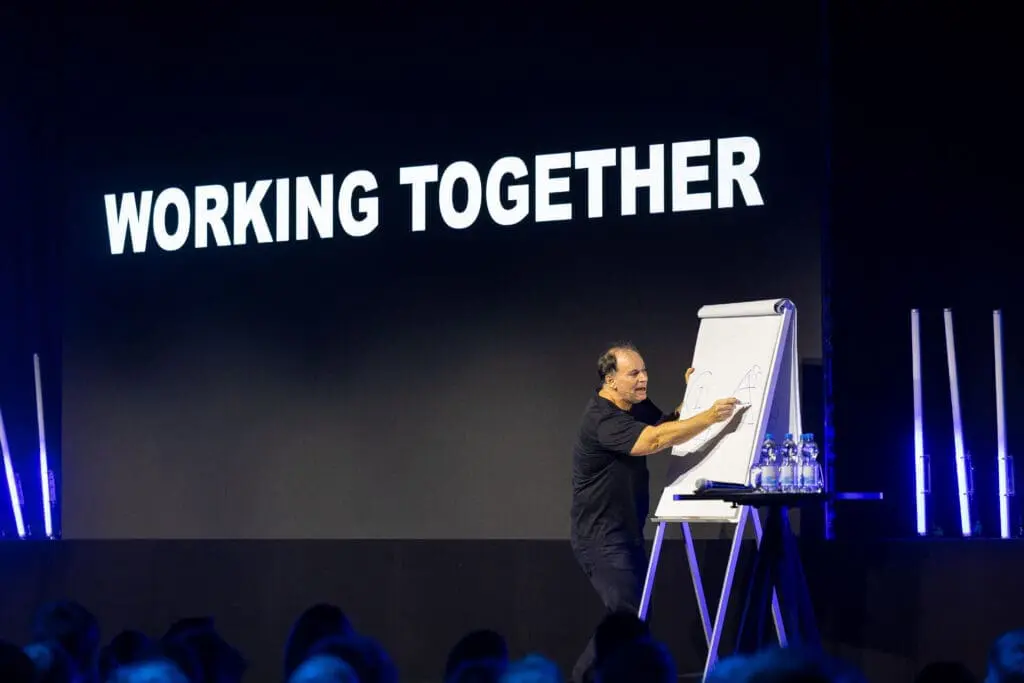
- Working Together Wins!
Teams consist of highly skilled sailing crews who continuously enhance their abilities. They are supported by a multinational shore team of hundreds, including scientists, engineers, boat builders, sail designers, and weather experts. In the 155-year history of this competition, victory has never gone to the teams with the largest budgets, most advanced infrastructure, or biggest crews.
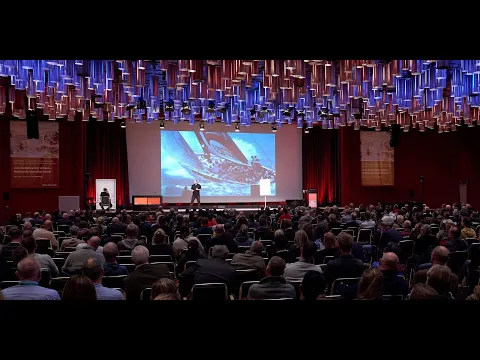
In his talk “WORKING TOGETHER WINS!”, Dominik Neidhart, former Alinghi crew member, moves from inspiration to practical education. Attendees will learn how the Swiss sailing team Alinghi achieved remarkable success on their first attempt and receive a framework for applying the principles of effective cooperation within their own workplaces.
- On Course Despite Headwinds – From Great to Unstoppable
As the world changes faster and competition intensifies, the culture of cooperation becomes increasingly critical, providing companies with the agility they require.
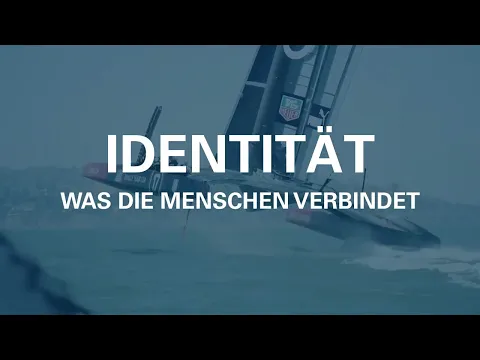
Businesses facing fierce competition and America’s Cup sailing teams encounter similar challenges. Both face rapidly evolving environments with changing locations, new technologies, updated rules, and diverse competitors, creating growing “headwinds.” As a former member of the victorious Swiss Team Alinghi, Dominik Neidhart shares how the team overcame these challenges on water and land, and how these successful strategies can be adapted to business.
In the America’s Cup, the team with the largest budget or infrastructure has never won in nearly 150 years. The decisive factor is always the team itself. The ability to generate maximum energy, execute precise maneuvers, and maintain flawless teamwork is essential to staying on course. This is the core of success.
- Cooperation Wins the Competition – Cooperation Wins the Race.
Outstanding achievements are only possible through the collaboration of informed, motivated, and skilled participants. Each member contributes their strengths and expertise, invests in the process, and expects to receive value in return to avoid feeling excluded or losing their identity. This is how cooperative relationships remain stable and effective. To continuously enhance cooperation, every team requires a theory to regularly assess and adjust their collaborative processes.
Alinghi’s mission statement focused on three key points: First, pride through competence. Second, not dreaming of success but concentrating on what can be controlled to take success into one’s own hands. Third, recognizing that it is always the team that makes the difference.
Trust is the foundation for any collaboration. Without trust, team members are unwilling to support or seek support from one another, eliminating the added value of working together.
- Go Hard or Go Home.
Few fully appreciate the extreme conditions a team faces on a high-tech racing yacht, isolated at sea and exposed to harsh weather. There is likely no other challenge where the success or failure of the entire endeavor depends so heavily on each member’s competence, performance, reliability, and mutual trust. The failure of any individual can jeopardize the entire mission and endanger the crew. Therefore, such crews have strict role divisions, combined with mental resilience, endurance, and both physical and psychological presence and empathy. Communication must be rapid and clear so everyone can perform their tasks immediately and flawlessly.
Thus, a yacht crew represents an ideal collective actor whose work provides valuable insights into the success or failure of demanding team projects. Dominik Neidhart analyzes these processes in detail, enabling the transfer of his experiences and insights to business and other organizations.
THE LOGIC OF “WORKING TOGETHER WINS!”
WHAT WE STAND FOR
Committed teams require a clear self-image regarding their values and how they treat one another.
TRUST
Strong mutual trust is essential for team members to share knowledge, support each other, and ask for help. This is the only way to create synergies and added value.
WORKING TOGETHER
In a competitive environment, the team must be the differentiator. The quality of cooperation determines success or failure. Successful teams exhibit a unique quality of collaborative action aligned with the company’s overall interests.
TOGETHER
It is not automatic that highly specialized individuals form a collaborative collective. This process must be actively developed and supported.
WORKING
Depending on the team’s phase, success conditions vary: idea development, problem-solving and training, and delivering peak performance in competition.
ENERGIZE YOUR TEAM
In the America’s Cup, as in business and science, the environment is constantly evolving. There is no direct path to the goal. Teams must continuously adjust their course and remain agile. These frequent maneuvers demand strength and energy.
WE ARE ALL IN THE SAME BOAT
The best helmsman cannot win a regatta with the wrong crew. It is no longer sufficient for everyone to simply do their job. Tolerance, acceptance, and respect among team members enable genuine accountability to the highest standards, motivating and challenging each other.
“HER MAJESTY, THERE IS NO SECOND…”
The race director responded to the British Queen at the first America’s Cup in 1851 after a small American yacht finished first ahead of the traditional British fleet. There are no silver or bronze medals in the America’s Cup, nor any prize money.
Even skilled and motivated teams collapse when they fail to deliver consistent results.
“Reflecting on my career as a professional America’s Cup sailor, what stands out most are not the wins or losses, but the diverse individuals who united around a shared idea and understood that success in this competition comes only from unleashing the unstoppable energy and potential of working together.”
Dominik Neidhart
Who is Dominik Neidhart?
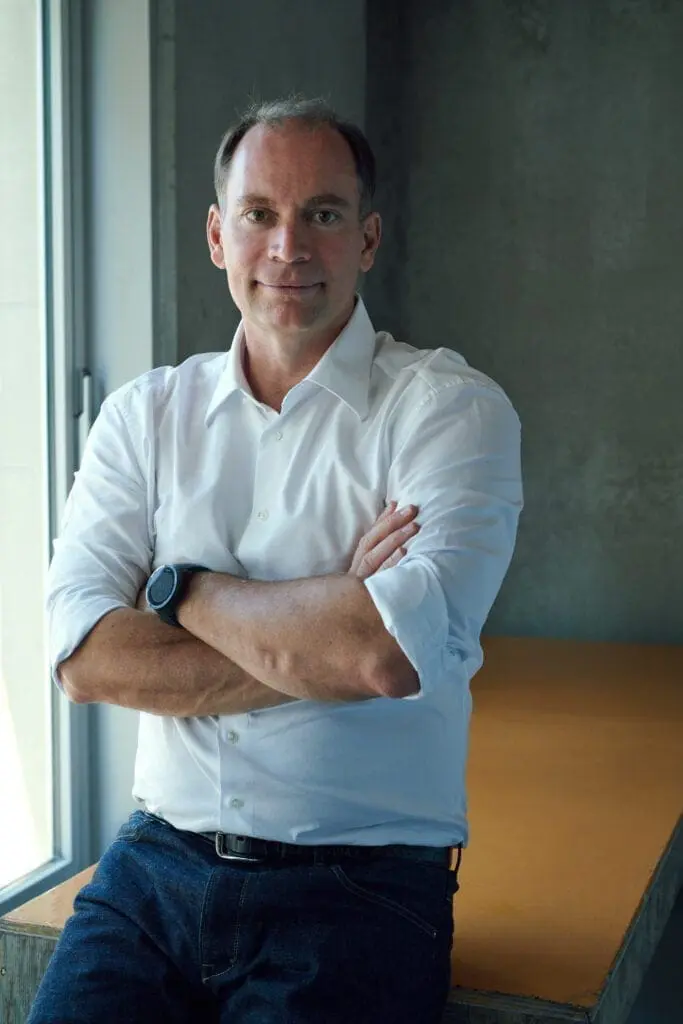
Dominik Neidhart is a Swiss elite athlete and three-time America’s Cup participant, the world’s most prestigious sailing event. As a crew member of the Alinghi team, he was instrumental in bringing the America’s Cup to Europe for the first time. After studying medicine, he pursued his passion for sailing and gained valuable experience in complex organization, high-level management, and effective teamwork through multiple America’s Cup campaigns.
Today, he shares his expertise as a globally sought-after speaker, management coach, and trainer specializing in cooperation culture. His lectures and workshops focus on motivation, teamwork, and team development, assisting companies in shifting from an internal competition mindset to a successful cooperation culture.