




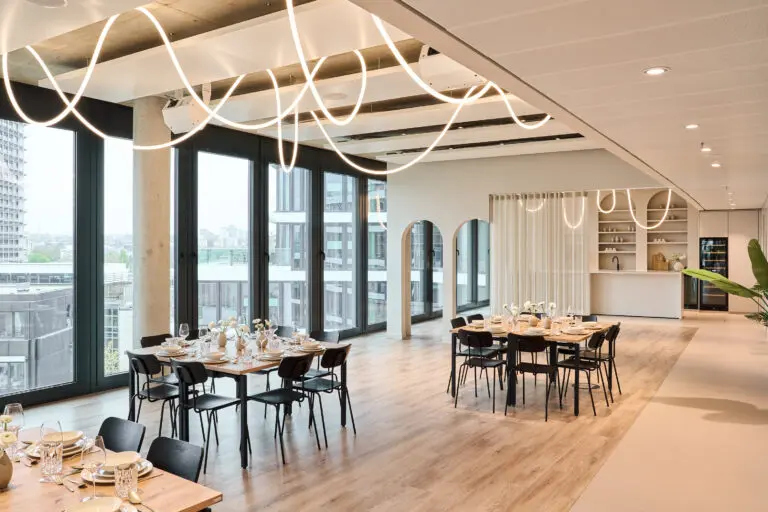












Event management could be considered a specialised field of business administration that is incomprehensible to the layperson. In the next paragraph, we shed some light on the subject and explain what event management actually means.
What is event management?
Event management refers to everything that is necessary to successfully organise an event. No one would dispute that it makes sense to think about the process in advance of an event or series of events – but what does this process involve, and what are the pitfalls? Event management usually involves the following steps:
1. Concept and planning: The desired goal of the event and the type of event are determined, the target audience is defined and a budget is drawn up.
2. Organisation: All resources required for the event are identified and listed. Examples include: location, decoration, technology, catering, programme design, personnel and security measures.
3. Implementation: The sequence, order, importance and requirements of the individual elements are determined and coordinated, similar to the choreography of a stage performance.
4. Follow-up: Analysis within the team to repeat what went well in the future and learn from mistakes. Measures to achieve these goals are derived, and feedback from participants is taken into account.
Although you don’t need an academic degree to work in event management, you do need a high degree of creativity, organisational and improvisational skills, time management skills and communication skills. If these are in place, participants will remember the event with positive emotions for a long time to come.